
This material is a continuation of the article:Practical for Theory of Power 2
The Taekwon-Do Encyclopedia, including the “Theory of Power” is studied by all practitioners, but…
– It contains examples that are principled and not particularly appropriate.
– It does not contain definitions.
– It contains general guidelines for techniques.
– It does not explain the essence of the techniques…
In most traditional martial arts, the defensive philosophy is based on so-called “blocks” that practitioners have perfected for years to automatism. These techniques are described as powerful, decisive, and capable of stopping any attack.
Blocks are various standardized movements (techniques) designed to repell, deflect or stop an incoming attack. There are different shapes: lower block, upper block, block outside and many more. The traditional goal of these techniques is not only to block the path of the blow, but also to “meet” it with force, deflecting the attack. According to the nature of the technique, they can be hard – for protection or soft – the hand “slides”, changing the trajectory of the blow.
Regular workouts are believed to strengthen the bones and muscles of the arms, making them strong enough to perform blocks. The training technique involves countless repetitions of each block in the air, as well as working with a partner who usually performs predictable, often predictable attacks.

From what has been said so far, we can formulate what a block is:
Block is a complex movement designed to stop or deflect an attack from an opponent in order to prevent traumatic contact.
The purpose of the block is not just to block the path of the impact, but to exert forcefully by redirecting the kinetic energy of the attack.
The essence of the blocking technique is the generation by the performer of an optimal amount of kinetic energy and the precise transfer of this energy to the opponent.
The implementation of a block consists of several successive phases:
- Preparatory – the body prepares for performance (this includes correction of position, initial elements of wool, breathing, etc.
- Executive – the body and its individual parts in a learned sequence accelerate towards the goal, generates kinetic energy.
- Focus – the moment of contact with the target or the end point when performing against an imaginary opponent (in the air).
The difference between a punch and a block at first glance is total – the trajectories of execution are different, as well as the blocking surfaces… But there are also identical thirs for impact and block with matching trajectories and impact/blocking surfaces!
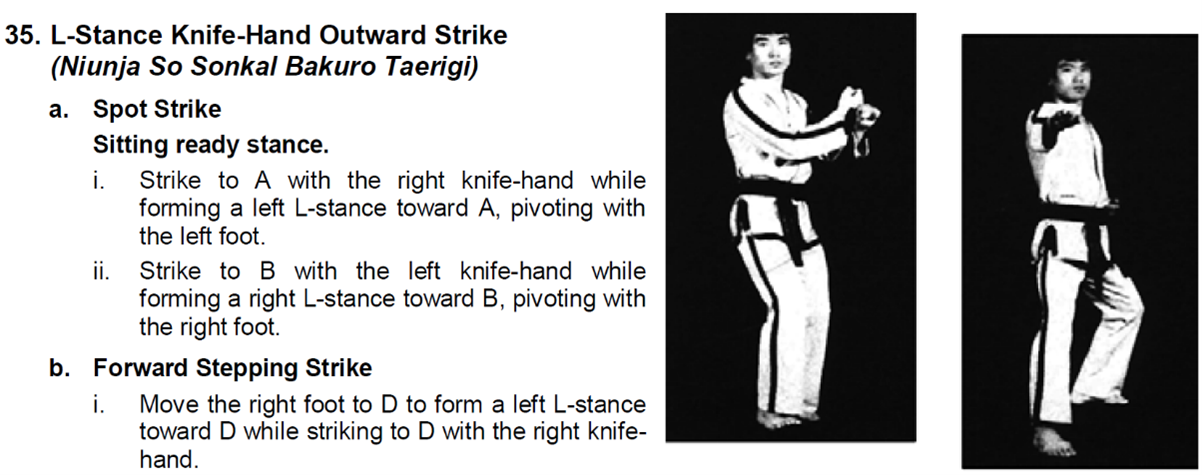
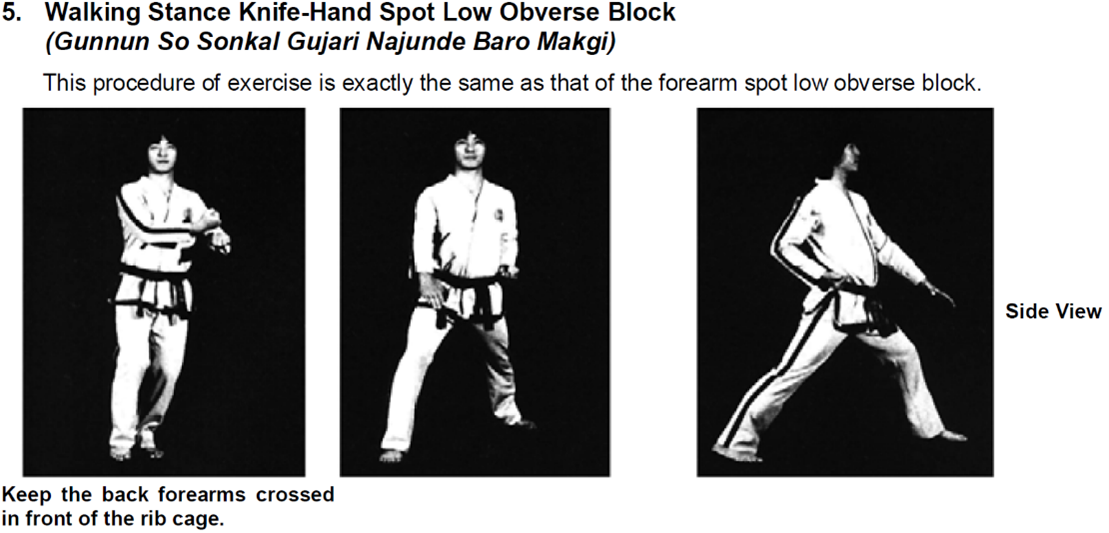
If we compare these (identical) techniques, we can find the difference:
- The two techniques have an overlapping essence – they generate kinetic energy and direct it towards the opponent.
- The two techniques have the same sequences of execution – preparatory, executive and focus.
- The two techniques have a different goal – the strike aims to strike on contact, and the block aims to prevent traumatic contact.
As a conclusion from the comparison, the following is concluded:
The difference between a shot and a block is in the purpose of the technique (the final result) – the striking technique is aimed at hitting, and the blocking technique is aimed at protecting.
Practically, the human body, especially its limbs, are not suitable for counteracting a direct impact without additional absorption. A body is not a steel skeleton, but a complex biomechanical system, and trying to turn one of its parts into a “shield” without proper absorption of impact energy will lead to destruction. Usually, the block is a passive reaction to an attack that has already begun and in practice it is not always effective.
To be continued…


